Event Overview
Living systems span multiple scales and levels of organization and display phenomena that often have no analog in the inanimate world. But for the last 500 years, physics has been focused on non-living matter. The physics of living systems is emerging as a new field, promising not only to reveal new insights about the inner workings of living systems, but also to push the limits of physics itself in the context of, for example, non-equilibrium physics and active matter research.
The Physics of Life Symposium aims to bring together researchers interested in leveraging the tools, approaches, and style of inquiry of physics to the complex and beautiful phenomena of life. Our objective is to nucleate a diverse and vibrant community of physical biologists in the San Francisco Bay Area, with the CZ Biohub SF as the convergence point for the exchange of ideas in an atmosphere that fosters collaborative research.
View videos from the first Physics of Life Symposium held in January 2023 here.
Keynote Speaker
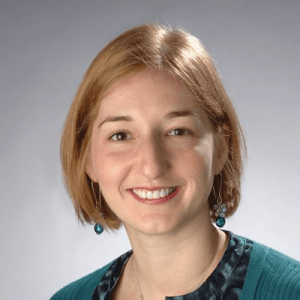
M. Lisa Manning, Ph.D
Lisa Manning is the William R. Kenan, Jr., Professor of Physics at Syracuse University in Syracuse, New York. Prof. Manning’s research uses simulations and theory to model the emergent properties of biological tissues
Lead Organizers
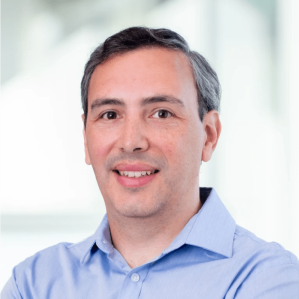
Adrian Jacobo, Ph.D.
Group Leader, Quantitative Tissue Morphogenesis at CZ Biohub SF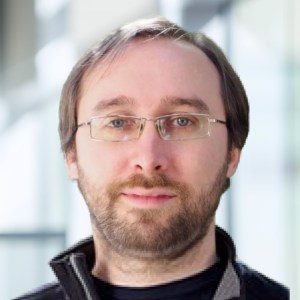
Hernan Garcia, Ph.D.
Associate Professor of Biophysics, Genetics, Genomics and Developmental Biology at UC BerkeleyScientific Organizing Committee
Akilandeswari Balasubramanian
Griffin Chure
Hernan Garcia, Ph.D.
Andrea Herman
Adrian Jacobo, Ph.D.
Manasa Kesapragada
Charlie Lang
Brandon Schlomann
Deepika Sundarraman
Program
Wednesday, September 25
Registration Opens
Light breakfast (provided)
Welcome Remarks
Keynote Address
M. Lisa Manning, Ph.D., Syracuse University
William R. Kenan, Jr., Professor of Physics at Syracuse University in Syracuse, New York. Prof. Manning’s research uses simulations and theory to model the emergent properties of biological tissues
Coffee Break
Submitted 15-Minute Talks
Jude Lee, Stanford University
“Ultra-resolution, multi-scale live imaging of the 3D genome, folded by motor proteins”
Megan Kober, UC Berkeley
“Fructose-2,6-Bisphosphate: Maker or Breaker of Glycolytic Regulation?”
Henry De Belly, UCSF
“Actin and membrane act as an integrated system to globally coordinate cell polarity during cell migration”
Ksenia Zlobina, UC Santa Cruz
“Understanding Life System Dynamics through Multiomics”
Gabriel Sturm, UC Berkeley
“Mitochondrial Pearling: an emerging class of organelle dynamics explained by a biophysical pearling instability”
Lunch
Submitted 15-Minute Talks
Zuben Scott, UCSD
“The endoplasmic reticulum as an active liquid network”
Jo-Hsi Huang, Stanford University
“Robust trigger wave speed in Xenopus cytoplasmic extracts”
Kate Cavanaugh, UCSF
“A core mechanical defect underlies the age-related dampening of implantation potential”
Vasudha Srivastava, UCSF
“Engineering the tissue structural ensemble: Mechanical fluctuations regulate the extent of structural order in tissues”
Austin Lefebvre, Calico Life Sciences
“From Voxels to Networks: A Comprehensive Tool for Physical Modeling of Cellular Organization”
Zhengda Li, Stanford University
“Geometrical constraints on apoptosis propagation”
Laura Persson, UCSF
“Physics Lessons From Worms: The role of electromagnetic fields in evaporation-sensing for long-range detection of water”
Coffee Breaks
Submitted 3-Minute Lightning Talks
Camilla Teng, UCSF
“Unveiling actomyosin cytoskeletal and adhesion dynamics in mammalian tissue fusion”
Bertie Ansell, Stanford University
“Structural Architecture of Ectomycorrhizal-Bacterial Interactions Viewed by High Resolution Electron Tomography”
Amir Bitran, UC Berkeley
“Towards a detailed molecular picture of non-equilibrium protein folding during real-time translation”
Neha Khetan, UCSF
“Quantitative analysis of IdU induced amplification in transcriptional noise using scRNA-seq and smRNA-FISH”
Aidan Cabral, Stanford University
“Chromatin architecture modulates cell mechanics”
Thomas Graham, UC Berkeley
“Single-molecule live imaging of endogenous protein interactions using proximity-assisted photoactivation (PAPA)”
Patrick Zager, UCSF
“Excess Membrane Buffers the Rate of Cell Shape Change in Neutrophils”
Tomoko Oshima, Stanford University
“Developing a Xenopus Egg Extract System to Reconstitute Prion Dynamics”
Xing Liang, Stanford University
“How dendrites establish and maintain their microtubule array?”
Manasa Kesapragada, UCSF
“Data-driven classification of cell subtypes based on time-lapse microscopy of single cells”
Manuel Razo-Mejia, Stanford University
“Evolving Solutions: In-Silico Evolution Meets Deep Learning for Rapid Adaptation”
Dong Shin (Chris) You, Stanford University
“Cell size increase leads to transcriptome remodeling”
Saehyun Choi, UC Berkeley
“Signaling protein clustering and condensation in the T cell signaling pathway”
Caleb Rux, UCSF
“Force-dependent spindle microtubule damage, remodeling and stabilization”
Closing Remarks
Poster Session & Social Hour
Food and beverage provided
Submitted Talks and Posters
Students, postdocs, and early career researchers (non-PIs) are encouraged to share their work via a 15-minute talk or 3-minute lightning talk, and all attendees are encouraged to present a poster. More details and the submission process are included during registration. The talk abstract submission window closed Thursday, August 15. Posters abstracts will be accepted through September 16.
Location
Contact
Questions? Contact the event organizers at physicsoflife@czbiohub.org