Event Overview
Designing a protein that binds a molecular target with sufficient affinity and selectivity is a core challenge in molecular design, and a known bottleneck in therapeutic development. Classical approaches require high-throughput laboratory systems that physically search through hundreds of thousands of possible binders, a process that can take weeks to months just to find initial candidates.
ESMFold2’s accuracy and speed makes large-scale computational search tractable, screening tens of thousands of candidate designs in days. In our preprint, we use this approach to design and experimentally validate minibinders and antibodies (scFv’s) against five targets central to oncology and immunology: EGFR and PDGFRβ, receptor tyrosine kinases implicated in tumor growth; PD-L1 and CTLA-4, immune checkpoints that cancer cells exploit to evade immune surveillance; and CD45, a regulator of immune cell signaling. Validated designs demonstrated both high affinity and specificity, confirmed by biolayer interferometry and live-cell immunofluorescence, respectively. Cryo-EM confirmed the predicted binding pose of an EGFR minibinder within experimental accuracy. A designed PD-L1 scFv blocked immune checkpoint suppression of T-cell signaling with nanomolar potency.
In this one-hour webinar, the researchers who led this work will walk through the full protocol, the wet lab validation strategy, and updates to the open-source notebook since launch, including speedups and reduced GPU memory requirements. The session closes with a tutorial on how to use our open source protocol on your own targets.
Speakers
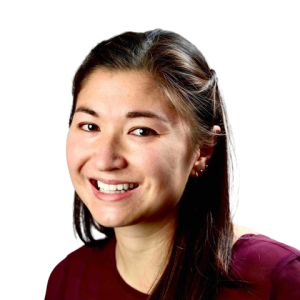
Elise Bruguera
Elise Bruguera is a wet lab scientist on the AI research team at Biohub, where she develops assays and workflows to evaluate our generative models in the real world. She came to Biohub through EvolutionaryScale and holds a PhD in structural biology and cell signaling.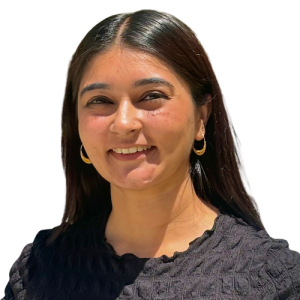
Jehan Keval
Jehan Keval is a wet lab researcher on the AI Research team at Biohub. She supports ESM model development by establishing assays to screen and characterize computational generations. Her background in protein science covers a wide range of biological applications, spanning early oncology target discovery, optogenetic tool development, and protein engineering for sustainable textiles.
Robert Verkuil
Robert Verkuil is a research engineer at Biohub. Coming previously from EvolutionaryScale and before that FAIR. His main focus is molecular design.