Event Overview
The integration of artificial intelligence into biological research has transformed how we approach fundamental questions in the life sciences. From predicting protein structures to analyzing complex imaging data, machine learning methods are enabling discoveries at scales and speeds previously unimaginable. Recognized by the 2024 Nobel Prize in Chemistry for breakthrough achievements in protein structure prediction, AI has proven its power to accelerate scientific understanding. Yet significant opportunities remain to deepen connections between AI innovators and the biological research community, particularly in biophysics and quantitative biology.
The “AI Applications in Biology Symposium” will bring together researchers at the intersection of machine learning and biological discovery, showcasing cutting-edge approaches across structural biology, imaging analysis, single-molecule biophysics, and omics data integration. Deliberately scheduled to coincide with the Biophysical Society Annual Meeting, this forum aims to create a dedicated space for researchers applying AI methods to biological problems – bringing together the computational community to share methodologies, discuss challenges, and explore innovations.
Across four thematic sessions, covering AI for cryo-EM and structural biology, single-molecule detection and tracking, image understanding, and omics data analysis, we will highlight both established frameworks and emerging approaches. Each session will feature invited leaders in the field alongside early-career researchers, fostering knowledge transfer and collaboration. A poster session will provide additional opportunities for participants to present their work and engage in detailed discussions.
This symposium is designed to spark new methodological insights, establish collaborative networks, and accelerate the development of AI tools tailored to biological challenges. Join us in shaping the future of computational biology!
Call for submissions: All attendees are invited to submit a brief abstract for consideration to give a 15-minute talk, or 1-minute poster pitch, and/or request a spot at the poster session. Early-career researchers are especially encouraged!
See below for important abstract submission and registration deadlines. There is no fee to attend.
Keynote Speakers
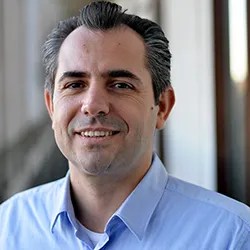
Nikos Hatzakis, Ph.D.
Professor Nikos Hatzakis is a leading scientist at the University of Copenhagen whose lab pioneers quantitative single-molecule and single-cell biophysics, combining cutting-edge microscopy with machine learning to unmask dynamic molecular mechanisms in biology.
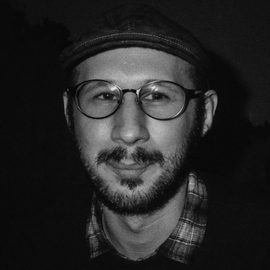
Martin Steinegger, Ph.D.
Professor Martin Steinegger is an Associate Professor in the Biology Department at Seoul National University, where he leads a lab that designs ultra-fast, open-source computational tools (e.g. MMseqs2, Foldseek, ColabFold) for large-scale protein and genomic data analysis.
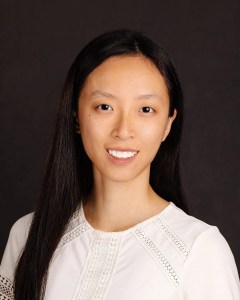
Xinyi Zhang, Ph.D.
Dr. Xinyi Zhang is an incoming Principal Investigator at AITHYRA in Vienna, who develops machine learning frameworks to integrate multimodal biological data, from spatial transcriptomics to chromatin imaging, uncovering cell states, tissue organization patterns, and disease mechanisms across neurodegenerative disorders and cancer.
Lead Organizers
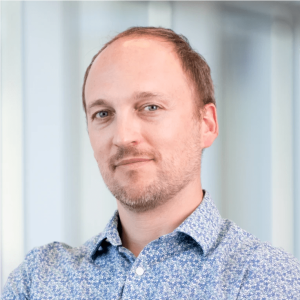
Loïc Royer, Dr., Rer. Nat.
Sr. Group Leader & Director of Imaging AI, Biohub
Scientific Advisors
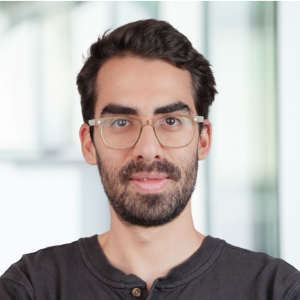
Jordão Bragantini
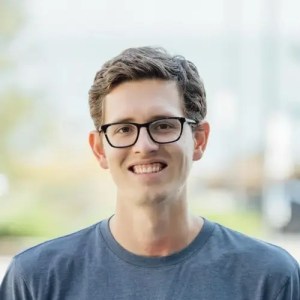
Alex Hillsley
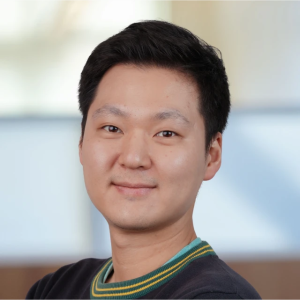
Yang-Joon Kim
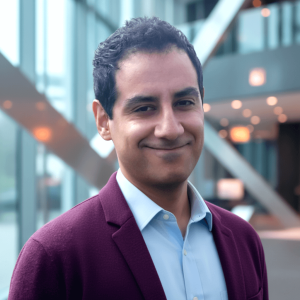
Dari Kimanius
Program
ALL TIMES IN PACIFIC TIME
Friday, February 20, 2026
Registration
Coffee and light breakfast available, poster set-up
Welcoming Remarks
Session 1: Single Molecules and Image Understanding
- Nikos Hatzakis, University of Copenhagen (SESSION KEYNOTE)
“From Photons to Principles by combining single particle biophysics with deep learning” - Hyoungjun (Peter) Park, European Molecular Biology Laboratory
“Pixel2Phenotype: Hyperspherical Self-Supervised Latent Spaces for High-Throughput Drosophila Morphology” - Jen Dionne, Stanford University
“High-quality-factor metasurfaces for dynamic peptide sequencing and single-cell phenotyping”
Coffee Break
Session 2: Cryo-EM and Structural Biology
- Martin Steinegger, Seoul National University (SESSION KEYNOTE)
“Exploring the Protein Universe via Multimers and Motifs” - Matthias Buck, Case Western Reserve University
“Current state of AlphaFold predictions, Coarse Grained (Martini3) and all atom simulations relative to NMR derived structures for transmembrane helix dimers. New insights on signal transduction.” - Ed Lyman, University of Delaware
“Predicting Membrane Protein Localization by Deep Learning on Structure and Chemistry” - Atsushi Matsuda, University of Washington
“Physics-Guided Neural Reconstruction of Cellular Membranes from Electron Microscopy” - Feng Yu, Lawrence Berkeley National Lab
“Integrating Experimental Data with AI to Generate Physiologically Relevant Protein Ensembles”
Lunch (provided)
The poster session will be open for preview during lunch.
Session 3: Omics and Multimodal Data
- Xinyi Zhang, AITHYRA (SESSION KEYNOTE)
“Representation learning for cell and tissue biology: from multimodal integration to biomarkers and function” - Moritz Schaefer, Stanford University
“Precision Histopathology via Multimodal Learning of Molecular Annotations” - Aditi Merchant, Stanford University
“Semantic design of functional de novo genes from a genomic language model - Kuan Pang, Stanford University
“PULSAR: a Foundation Model for Multi-scale and Multicellular Biology” - Qin Zhu, UCSF
“Revealing a coherent cell state landscape across single-cell datasets with CONCORD”
Afternoon Break
Biohub Showcase
- Thomas Hayes, Biohub
- 3-minute lightning talks from Biohub staff
Poster Pitches
1-minute talks from selected poster session presenters
Closing Remarks
Poster Session & Reception
Hors d’oeuvres, beer, wine, and non-alcoholic beverages will be served.
Call for Submissions & Key Dates
- All attendees are invited—and early-career researchers are especially encouraged—to submit a brief abstract for consideration to give a 15-minute talk or 1-minute poster pitch. Abstracts should be submitted by Tuesday, January 20, 2026 for full consideration.
- All attendees are welcome and encouraged to request a spot at the poster session. Poster requests will be accepted until general event registration closes or the poster session fills up, whichever comes first.
- Talk abstracts and poster requests can be submitted via the registration form (please note the deadlines above).
- General event registration will remain open until Thursday, February 12 or until capacity is reached and the waitlist is full, whichever comes first. Register early to ensure your spot in the event!
Location
Nearby Hotels
Hotel Luma
100 Channel Street San Francisco, CA
Phone: +1 (415) 266-9999
Email: info@lumahotelsf.com
District: Mission Bay
Transportation: Muni KT to Mission Bay or 16-minute walk (0.7 mile)
Hyatt Place SF / Downtown
701 3rd Street, San Francisco, CA 94107
Phone: +1 (415) 767-2000
District: South Beach / China Basin
Transportation: Muni KT to Mission Bay or 23-minute walk (1.0 mile)
Hotel Via
138 King Street, San Francisco, CA 94107
Phone: +1 (415) 200-4977
Email: info@hotelviasf.com
District: South Beach / China Basin
Transportation: Muni KT to Mission Bay or 24-minute walk (1.1 mile)
Contact
Email your questions and comments to the event organizers at: AIAB2026@czbiohub.org