A few weeks ago, I joined CNBC’s Becky Quick at the Aspen Ideas: Health Festival for a conversation about AI, biology, and the future of medicine.
There’s one moment on stage I keep coming back to. While discussing progress around genomics and personalized medicine, Becky looked at me and said: “It really feels like things are starting to happen now.”
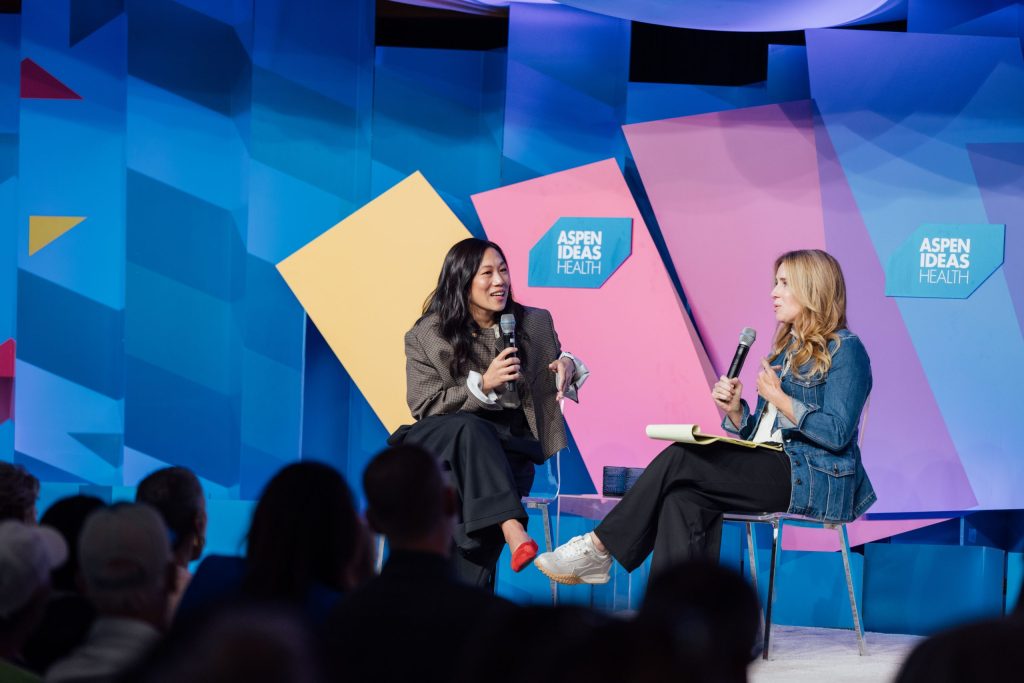
Hearing these words — surrounded by some of the sharpest minds in science, health, and technology — captured what an exciting, hopeful time this is in medicine. And it reminded all of us at Biohub, who spend every day immersed in this work to cure or prevent disease, of the potential impact of our work.
My time in Aspen inspired me to share an update with you all on the incredible start to the year we’ve had at Biohub.
Decoding the building blocks of life
Proteins are the building blocks of life. They form cellular structures, defend against infection, and regulate nearly every process that keeps organisms alive. And yet, scientists still know remarkably little about how proteins work.
In May, Biohub took a step forward in closing that gap with the release of a world model of protein biology, built on the next generation of Evolutionary Scale Models (ESM). Trained on billions of protein sequences shaped by evolution, this scientific engine can predict how proteins fold, interact, and function — and even design entirely new ones. Scientists have already used it to design antibody candidates that showed promising results in early lab tests against cancer and immune-related targets. It’s an early glimpse into a future in which treatments can be engineered for the exact biology driving a patient’s disease. You can read more about this work in Nature.
What I find most energizing about our models, including ESM, is that they’re fully open: any scientist can use, improve, and build on them. Building tools that accelerate science is what Biohub was built for.
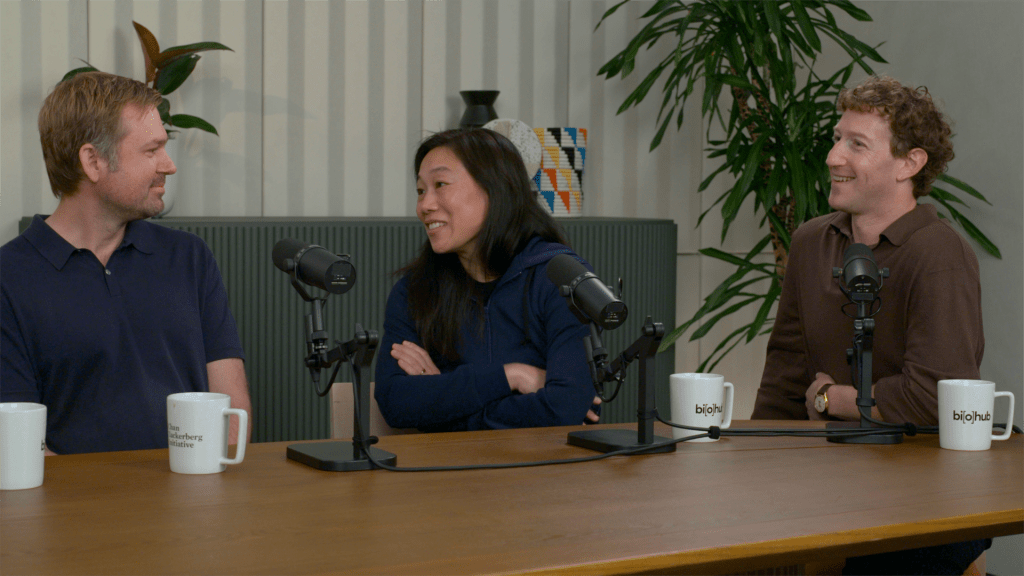
A new window into the cell
Understanding biology depends on the ability to observe it. For decades, scientists have dreamed of a technology capable of imaging the smallest and faintest molecular structures inside our cells. Many believed it simply couldn’t be done.
Last month, Biohub scientists, in collaboration with a team led by Holger Müller at UC Berkeley, proved otherwise by unveiling the world’s first laser phase plate for electron microscopy. This technology uses a laser 100 million times brighter than the Sun’s surface to reveal molecular structures that were once almost impossible to see. By giving scientists an unprecedented window into the inner workings of our cells at near-atomic detail, laser phase plate technology can open new possibilities for cell biology and drug development.
As our own Bridget Carragher told Science: “If you could really just look inside a cell and see the proteins that you liked, that’s the next revolution in structural cell biology. It might change everything.”
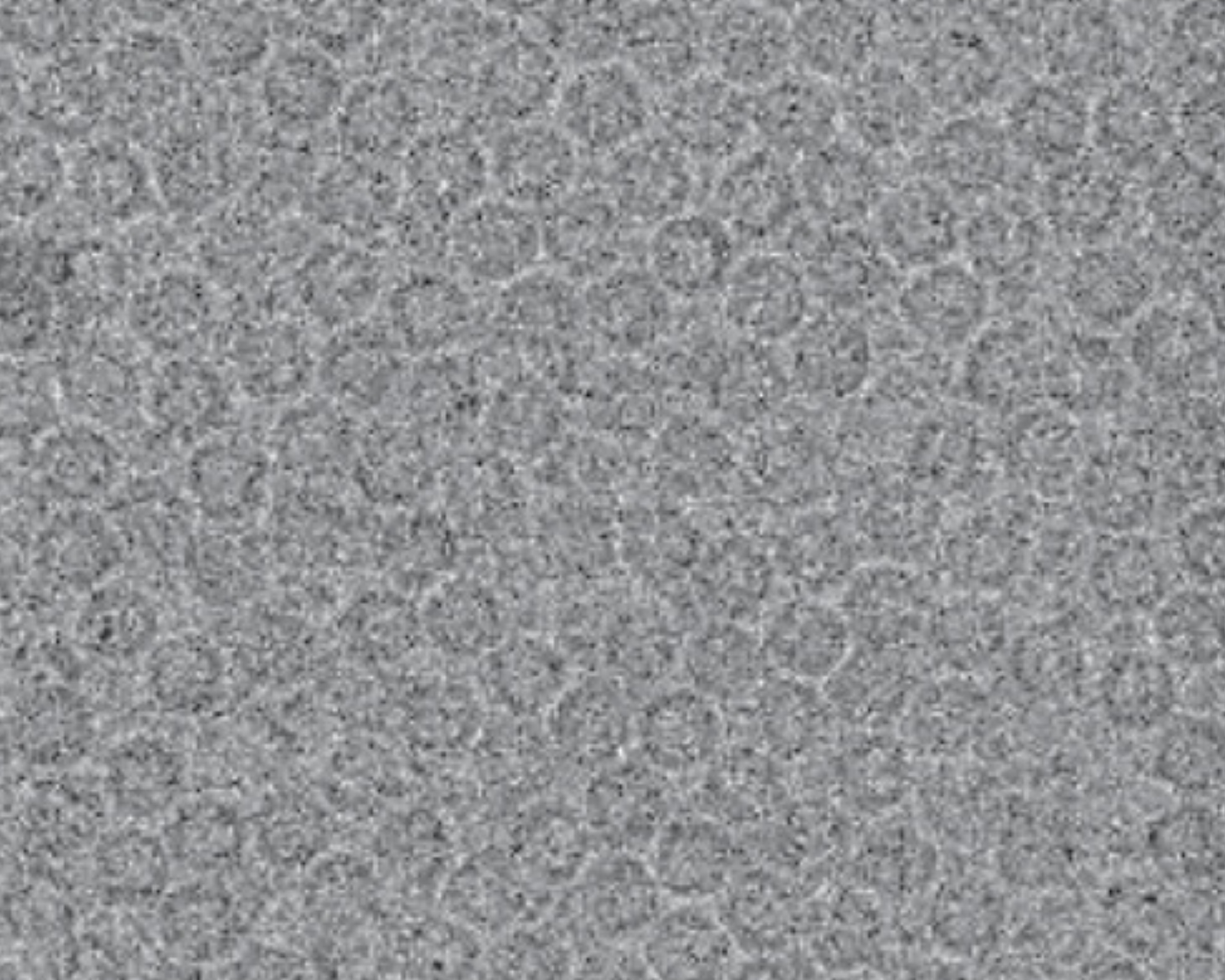
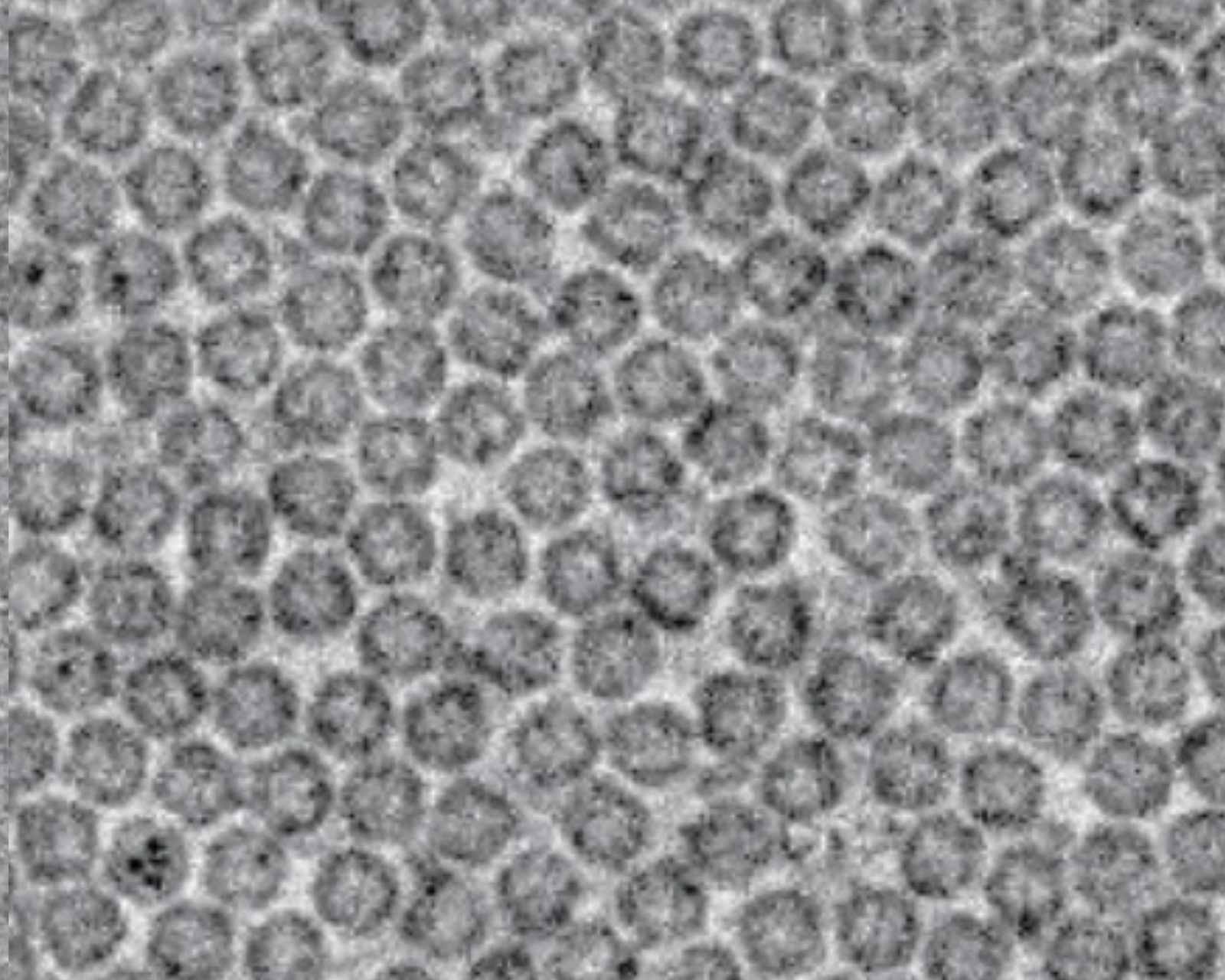
Apoferritin, a small iron-storage protein, imaged with the dual laser phase plate (xLPP) with the laser off (left) and on (right), demonstrating a marked increase in contrast.
Building biology’s next frontier, together
Frontier AI models are making it possible to tackle one of biology’s greatest challenges: building a model of the human cell.
Such a model could fundamentally change how scientists study biology, allowing them to simulate cellular processes before testing them in a lab. But as I wrote in TIME this past spring, realizing that vision will require massive amounts of biological data — far more than any one lab could generate. That’s why we came together with some of the world’s leading research institutions to launch the Virtual Biology Initiative: a global effort to build the shared datasets and scientific partnerships needed to create a predictive virtual model of the human cell.
The Virtual Biology Initiative is more than an investment. To us, it’s an invitation — to researchers, institutions, and partners around the world to join together in building an open scientific foundation for all.
Helping patients power discovery
At Aspen Ideas, Becky and I talked about the extraordinary role patients and their families play in advancing rare disease research. We discussed Rare As One, Biohub’s network that empowers patient-led organizations to share knowledge, build community, and turn lived experience into scientific progress.
Since 2019, the Rare As One network has engaged more than 320,000 patients and community members and more than 26,000 researchers. We’re especially proud that more than half of the organizations in our network have launched clinical trials of their own, including the TESS Research Foundation.
This fall, we’ll build on that momentum by opening applications for the next cycle of Rare As One, which will support patient-led organizations spanning rare cancers and pulmonary and immune diseases.
Looking ahead
As a physician, I find myself asking the same question whenever I reflect on our work: what could this mean for patients?
There’s still so much to discover. But what makes this moment so encouraging is that Biohub is building better ways to find answers — one model, one tool, and one network at a time.
With care,

Priscilla
Co-Founder, Biohub