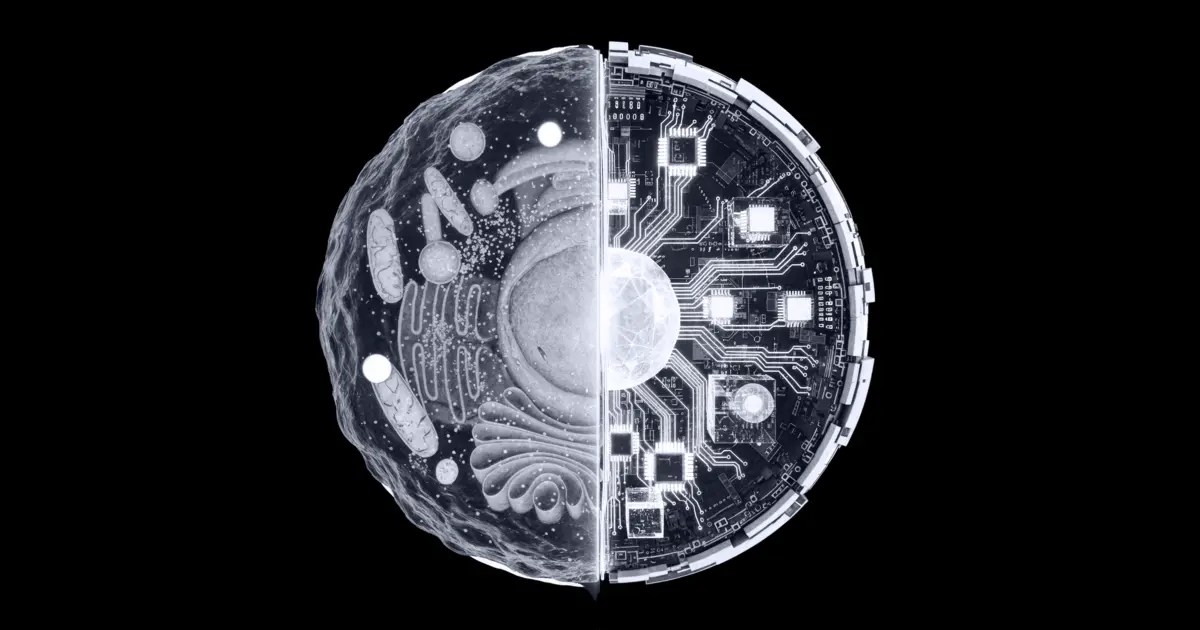
Immune cells already possess remarkable abilities: they circulate throughout the body, home to sites of injury and infection, and distinguish healthy tissue from threats.
Now, scientists are engineering those cells to do far more – such as detect disease before symptoms emerge, precisely target immune suppression or inflammation at its source within disease-related tissues, or sense and report the earliest molecular signatures of diseases.
This is the convergence of synthetic biology and immunology, a new frontier in which immune cells can be reprogrammed as adaptive diagnostic tools and medicines. By applying engineering principles to living systems, researchers can program immune cells with entirely new capabilities, from sensing specific disease signals to delivering targeted therapies.
But realizing this potential requires building something fundamental that doesn’t yet exist: a comprehensive, modular toolkit that any scientist can use to implement a microprocessor-like logic circuitry inside our own immune cells for different therapeutic applications. For instance, to deliver a therapeutic agent upon sensing a complex set of events that uniquely define a disease-related tissue.
To assemble that toolkit, Biohub is supporting 15 research projects with synthetic biology experts to establish the foundational infrastructure needed to transform immune cell engineering from isolated breakthroughs into an interconnected ecosystem. Together, these teams will develop the logic circuits, synthetic receptors, binder libraries, and sensing platforms that will enable immune cells to become precision-guided therapeutics.
Among the funded researchers are some of the most accomplished scientists working at the intersection of biology and engineering. To cite a few – Nobel laureate David Baker and his team at the University of Washington are designing protein circuits that can read combinations of biological signals inside immune cells and respond with precisely targeted actions, essentially programming cells to make decisions. At the Broad Institute, synthetic biology pioneer James Collins is pursuing a parallel vision through RNA: building molecular circuits that detect subtle disease signals and respond by either flagging it for diagnosis or deploying a therapeutic response. And at UCSF, Wendell Lim is assembling a parts catalog for the field. This modular collection of sensors, logic circuits, and proof-of-concept testbed systems will allow researchers to mix and match biological components to detect and respond to tumors, inflammation, or other disease states with remarkable precision.
The awarded projects embody the frontier, team-based science essential to Biohub’s continued effort to harness the immune system to treat and ultimately prevent disease with unprecedented specificity.
“We are excited to welcome this dream team of accomplished scientists to our growing community. Technologies developed through these and future projects will bring us closer to our goal of engineering immune cells to act as precision-guided therapeutics to cure or prevent disease.”
President of Immune Cell Reprogramming and Head of Biohub, New York, Andrea Califano
These projects represent more than parallel efforts – they form an integrated network in which advances in one lab accelerate progress across the others. A synthetic receptor developed in one project becomes a building block for logic circuits in another; binder libraries created by one team enable sensing platforms elsewhere. Together, this creates a compounding system of innovation that accelerates the entire field.
The fifteen teams building the toolkit are:
PI: David Baker (University of Washington)
Computational design of protein circuits for programmable cell therapies
PI: Lacramioara Bintu (Stanford University)
Co-PI: Michael Bassik (Stanford University)
High-throughput engineering of macrophage circuits for sensing and killing
PI: Jef Boeke (New York University)
Reimagining antibody genes with Big DNA
PI: James Collins (Broad Institute of MIT and Harvard)
Programmable RNA circuits for immune surveillance and early disease intervention
PI: Michael Elowitz (California Institute of Technology)
Programmable combinatorial sensing for engineered immune cell therapies
PI: Omar Khan (University of California, San Francisco)
Co-PIs: Alexander Marson (University of California, San Francisco), Kole Roybal (University of California, San Francisco)
Programmable B cell circuits for adaptive anti-tumor immunity
PI: Wendell Lim (University of California, San Francisco)
Cell programming library
PI: Alexander Marson (Gladstone Institutes)
Comprehensive mapping of human immune cell surface receptor binding
PI: Renato Ostuni (Vita-Salute San Raffaele University)
Co-PIs: Mario Leonardo Squadrito (Vita-Salute San Raffaele University), Andrea Ditadi (Vita-Salute San Raffaele University)
Tumor niche-programmable macrophages for precision cancer immunotherapy
PI: Filipe Pereira (Lund University)
Co-PI: Axel Hyrenius Wittsten (Lund University)
A ‘sense-and-reprogram’ platform for systemic cancer immunotherapy
PI: Lei Stanley Qi (Stanford University)
Co-PI:Wing Wong (Stanford University)
Compact multi-input gated genetic circuit in primary human T cells
PI: Milos Simic (University of Chicago)
Engineered immune sentinels for early neurodegeneration detection
PI: Christopher Voigt (Massachusetts Institute of Technology)
Co-PIs: Michael Bimbaum (Massachusetts Institute of Technology), Katie Galloway (Massachusetts Institute of Technology)
Genetic circuit design automation for cellular immunotherapy
PI: Peter Yingxiao Wang (University of Southern California)
Co-PI: John Lee (University of California, Los Angeles)
Ultrasound-triggered synthetic whispers for selective immune regulation
PI: Xin Zhou (Dana-Farber Cancer Institute)
Co-PI: H. Kay Chung (University of North Carolina at Chapel Hill)
Novel receptor signal biocircuits and degraders in T cells