Event Overview
The inaugural Bay Area Plant Hub Annual Symposium will bring together plant scientists from across the Bay Area. The meeting also welcomes participants from across the Western United States and Canada, reflecting the broader ASPB Western Section partnership. The extraordinary promise of plant science is to address the most important societal challenges of our time, including ensuring environmental sustainability and protecting biodiversity. The immediacy of these challenges calls for investment of time and resources. Fortunately, the Bay Area is home to one of the most dynamic and broadly impactful plant science communities in the world. Bay Area plant science is typified by strengths in fundamental research on plant systems at every scale: molecules, genes, organisms, populations, ecosystems, and the planet. The Bay Area is also home to a thriving biotech industry that supports both startups and established companies. This symposium aims to provide a hub to bring this community together and enable synergistic impact. The meeting is presented by Chan Zuckerberg Biohub SF in partnership with the American Society of Plant Biologists (ASPB) Western Regional Section, Leica Microsystems, and Ansa Biotechnologies.
The meeting will comprise plenary talks and poster presentations from scientists from across the Bay Area and Western section of the ASPB. Two plenary sessions will be organized to cover general topics in plant science from molecular biology to ecology and evolution. A themed plenary session focused on “Innovations in Plant Science for Sustainability” will provide an opportunity for local researchers to present work at the heart of utilizing plants to mitigate human impacts on our planet, as well as future-proofing plants in agricultural and natural ecosystems. Our keynote session will include a presentation by Professor Pamela Ronald (UC Davis) and panel discussion focused on Bay Area initiatives aimed at improving sustainability through innovative plant science. Finally, a catered poster session reception will provide participants with an interactive forum for forming synergistic connections with plant scientists from the Bay Area and the western region of ASPB.
Registration and event attendance are free. Please register by March 12 to be considered for a short talk or poster-pitch talk. Registration for the event will close by Monday, April 7. Space is limited; register early to avoid being placed on a waiting list.
Update: As of March 12, registration is full. New RSVPs will be added to a waitlist. See “Key Dates” section below for more details.
Keynote Speaker
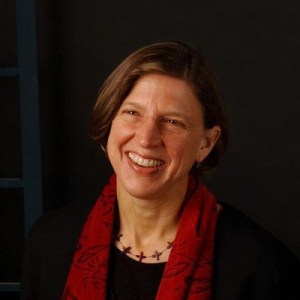
Pamela Ronald, Ph.D.
Dr. Pamela Ronald is a Distinguished Professor in the Department of Plant Pathology and the Genome Center at the University of California, Davis, recognized for her research in infectious disease biology and environmental stress tolerance in plants. Her work includes isolating the rice Xa21 immune receptor and the Submergence Tolerance 1 gene, facilitating the development of high-yielding, flood-tolerant rice varieties grown by over six million subsistence farmers in India and Bangladesh. She co-authored “Tomorrow’s Table: Organic Farming, Genetics, and the Future of Food” with her husband, organic farmer Raoul Adamchak, and has been honored as a National Geographic Innovator and a member of the National Academy of Sciences.
Lead Organizer
Scientific Organizing Committee
Patricia Baldrich González, Ph.D.
Dominique Bergmann, Ph.D.
Siobhan Brady, Ph.D.
Judy Brussian, Ph.D.
Jennifer Brophy, Ph.D.
Marco Burger, Ph.D.
Adrien Burlacot, Ph.D.
Devin Coleman-Derr, Ph.D.
Yangnan Gu, Ph.D.
Paul Kasemsap, Ph.D.
Britt Koskella, Ph.D.
Peggy Lemaux, Ph.D.
Jennifer Lewis, Ph.D.
Trent Northen, Ph.D.
Elizabeth Sattley, Ph.D.
Johannes Scharwies, Ph.D.
Henrik Scheller, Ph.D.
Nellima Sinha, Ph.D.
Susannah Tringe, Ph.D.
John Vogel, Ph.D.
Zhiyong Wang, Ph.D.
Vivian Zhong
Presented in Partnership With

Program
Wednesday, April 16, 2025
Registration Open
Attendees arrive, pick up badges, and socialize. Coffee and light breakfast will be available.
Welcome Remarks & Plenary Session 1
Five 10-minute talks + Q&A and five 1-minute poster pitches
Sponsor Talk: ASPB – Western Section
Xing Wu, UC Berkeley
“Modeling rapid plant adaptation: From evolutionary genomics to future predictions”
Conchi Manzano, UC Davis
“The role of SlEXO1 and SlSCZ genes in regulating the exodermis polar lignin cap formation”
Sasilada Sirirungruang, UC Berkeley
“Plant glycosyltransferase specificity revealed by library-on-library screening”
Bertie Ansell, Stanford University
“Structural investigations of fungal-bacterial interactions via cryogenic electron tomography”
Poster Pitches:
- Hsin-Tzu Wang, Lawrence Berkeley National Laboratory (Poster #1)
- Isabelle Henry, UC Davis (Poster #2)
- Amanda Agosto Ramos, UC Davis (Poster #3)
- Heather Phillips, Stanford University (Poster #4)
- Lauren Puleo, Stanford University (Poster #5)
Plenary Session 2
Four 10-minute talks + Q&A and five 1-minute poster pitches
Min Jia, UC Berkeley
“Condensation of MAC5A promotes SUMO E3 ligase SIZ1-mediated immune activation in Arabidopsis”
Tara Lowensohn, Stanford University
“Development of pooled gene perturbation and protoplast sorting technologies enable a first-in-class, in planta single-cell genetic screen”
Xiaosa (Jack) Xu, UC Davis
“A developmental viewpoint of plant inflorescence evolution at single-cell resolution”
Andrea Mair, HHMI/Stanford
“Proximity labeling and deletion of a conserved domain give insights into mechanistic roles of SPCH during stomatal development”
Poster Pitches:
- Shamita Bhattacharjee, UC Davis (Poster #6)
- Renee Weizbauer, Carnegie Institution (Poster #7)
- Marco Dueñas, UC Berkeley (Poster #8)
- Saad Naseem, Lawrence Berkeley National Laboratory (Poster #9)
- Lauren Holland, UC Berkeley (Poster #10)
Lunch & Themed Breakouts
Lunch provided. Posters will be available for viewing. Community-organized topical areas will have lunch in conference rooms.
Themed Plenary: "Sustainability Through Innovations in Plant Science"
Sponsor Talk: Leica Microsystems
Yalikunjiang Aizezi, Carnegie Institution for Science
“Crosstalk between phosphorylation and O-glycosylation in pattern-triggered immunity”
Tianrun “Jerry” Li, UC Davis
“Unlocking expanded FLS2 recognition: Rational receptor engineering through structural modeling, amino acid properties, and selection”
Solène Moulin, Stanford University
“Cell evolution of nitrogen-fixing endosymbioses: A blueprint for synthetic self-fertilizing plants”
Evan Groover, UC Berkeley
“Single-cell functional genomics to tune sorghum photosynthesis”
Poster Pitches:
- Adam Seluzicki, HHMI / Salk Institute (Poster #11)
- Wei Wei, UC Berkeley (Poster #12)
- Tomoya Honda, Joint Genome Institute (Poster #13)
- Scott Lewis, Donald Danforth Plant Science Center / Washington University in St Louis (Poster #14)
- Olivia Baldwin, San Diego State University (Poster #15)
Coffee Break
Keynote Session: “Cultivating Innovative Plant Science in the Bay Area”
30-minute presentation, followed by 30 minutes of community discussion of the future of the Bay Area Plant Science Hub.
Keynote Speaker:
Pamela Ronald, Ph.D.
Dr. Ronald is a Distinguished Professor in the Department of Plant Pathology at the University of California, Davis, recognized for her research in infectious disease biology and environmental stress tolerance. Her work has led to the development of disease-resistant and flood-tolerant rice varieties, significantly benefiting global food security.
Additional Panelists:
- Nathan Pumplin, holding a Ph.D. in plant genetics from Cornell University, serves as the CEO of Norfolk Healthy Produce, a company dedicated to developing and marketing specialty tomato products with enhanced nutrition and sustainability using bioengineering technologies.
- Elizabeth Sattely is an Associate Professor of Chemical Engineering at Stanford University, where she focuses on discovering and engineering plant metabolic pathways to enhance human health. Her multidisciplinary approach combines chemistry, enzymology, genetics, and metabolomics to develop sustainable plant-based therapeutics and materials for the bioeconomy.
- Brad Zamft, was trained as a physicist but now as synthetic biologist he’s the co-founder and CEO of Heritable Agriculture, a company focused on advancing plant breeding and biotechnology through an AI-driven platform to improve crop yields, nutrition, and resilience.
Reception and Poster Session
Hors d’oeuvres, beer, wine, and non-alcoholic beverages will be served.
Call for Submissions
- Submission Guidelines: During event registration, you will have the opportunity to provide a brief summary of a research project that would like to present at the symposium. Abstracts will be reviewed by the program committee and selected to give talks (10-minute presentation + Q&A or 1-minute poster pitch).
- Deadline: for full consideration, submit your abstract by Wednesday, March 12 (applies to 10-minute talks and 1-minute poster pitches).
- Eligibility: All participants are invited to submit an abstract to present a poster at the meeting. Early career scientists will be prioritized for presentation slots in the plenary sessions.
Key Dates
- General registration: please register by Monday, April 7
- Talk abstract submissions: for full consideration, submit your abstract by Wednesday, March 12 (applies to 10-minute talks and 1-minute poster pitches)
- Talk selection notifications: we aim to send notifications by Friday, March 21
- Posters (without 1-minute pitch): requests will be accepted through the general registration deadline, Monday, April 7
Location
Accommodations
Hotel Luma
100 Channel Street San Francisco, CA
Phone: +1 (415) 266-9999
Email: info@lumahotelsf.com
District: Mission Bay
Transportation: Muni KT to Mission Bay or 16-minute walk (0.7 mile)
Hyatt Place San Francisco / Downtown
701 3rd Street, San Francisco, CA 94107
Phone: +1 (415) 767-2000
District: South Beach / China Basin
Transportation: Muni KT to Mission Bay or 23-minute walk (1.0 mile)
Hotel Via
138 King Street, San Francisco, CA 94107
Phone: +1 (415) 200-4977
Email: info@hotelviasf.com
District: South Beach / China Basin
Transportation: Muni KT to Mission Bay or 24-minute walk (1.1 mile)
Contact
Questions or comments can be emailed to the event organizers at baph2025@czbiohub.org