News
June 11, 2026
Making the invisible visible
A landmark achievement in microscopy is poised to reveal the molecular machinery of life inside cells, at near-atomic detail.
-
GEN: Virtual Cells Go Multiscale to Predict Complex Biology
AI models inform therapeutics that can restore diseased cells to healthy states
-
Protein Modeling, Cell Imaging and Patient-Powered Science: Reflections on Biohub’s Start to the Year
Co-founder Priscilla Chan shares reflections following Aspen Ideas: Health on the models, tools, and people driving Biohub's progress this year.
-
Surprising drug targets for psoriasis emerge from comprehensive CRISPR study of human skin cells
Analysis of results by AI ‘novelty filter’ led researchers to formulate topical gels that, in mice, were as effective as widely used injected therapy.
-
From patient communities to precision treatments: harnessing AI-powered biology for rare disease
-
Science: Laser-boosted microscopes could reveal new drug targets, sharpen views inside cells
Enhanced cryo–electron microscopy promises to bring previously elusive proteins into view
-
C&EN: A new, ultrabright laser powers a cryo-EM advance 15 years in the making
Phase contrast enables structures of smaller proteins, could drive in-cell proteomics
-
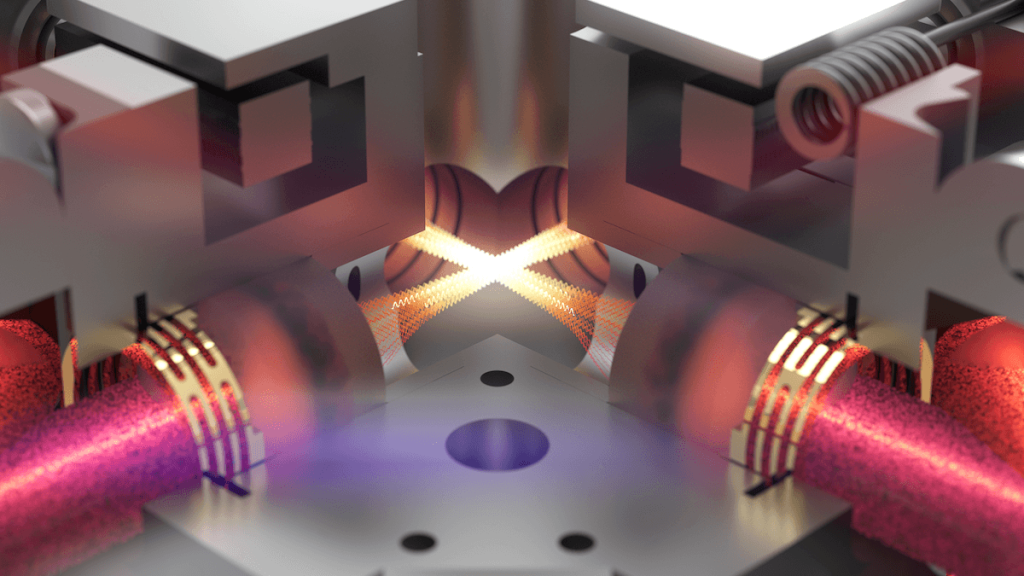
Making the invisible visible
A landmark achievement in microscopy is poised to reveal the molecular machinery of life inside cells, at near-atomic detail.
-
Microscope Breakthrough Will Open Unprecedented View into Our Cells
Biohub and UC Berkeley show that the laser phase plate, a revolutionary device with a laser 100 million times brighter than the Sun, dramatically improves images obtained through cryo-electron microscopy, giving scientists a new window into the molecular underpinnings of disease
-
Nature: Move over, AlphaFold: open source model predicts shape of 1 billion proteins
The new open-source atlas, generated by an AI tool called ESMFold2, vastly increases the known protein universe.
-
Biohub releases a world model of protein biology
Biohub’s open models map the protein universe and design functional binders with therapeutic-level affinity in the lab.
-
Biology’s blind spot
Inflammation drives nearly every major disease, yet we’ve never been able to directly watch it progress in living tissue. These researchers are building the technologies to change that.
-
The immune cell engineers
Fifteen research teams are building the molecular toolkit to reprogram the body’s own defenders across diverse disease areas.